

The oil and gas industry operates in some of the harshest environments on the planet, where extreme temperatures, high pressures, and corrosive media pose severe challenges to equipment reliability. Among critical process equipment, shell and tube heat exchangers play a pivotal role in heat transfer operations-from crude oil refining and natural gas processing to offshore drilling. For GNEE, engineering shell and tube heat exchangers tailored for oil & gas applications means prioritizing corrosion resistance and high-temperature stability, ensuring uninterrupted operation, reducing maintenance costs, and safeguarding operational safety.
Why Corrosion Resistance & High-Temperature Design Matter in Oil & Gas
Oil and gas processes involve aggressive substances such as hydrogen sulfide (H₂S), carbon dioxide (CO₂), saltwater, and acidic hydrocarbons. These media easily cause corrosion, erosion, and fouling of heat exchanger surfaces, leading to reduced heat transfer efficiency, equipment leakage, and even catastrophic failures. Meanwhile, processes like steam cracking, hydrocracking, and natural gas liquefaction require heat exchangers to withstand temperatures exceeding 400°C and pressures up to 150 bar. Substandard high-temperature design can result in material fatigue, deformation, and shortened service life.
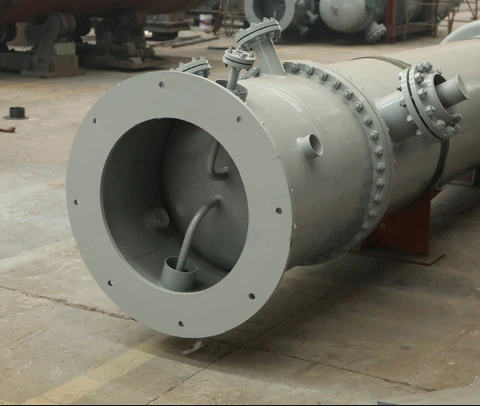
For oil & gas operators, the cost of unplanned downtime is staggering-often reaching millions of dollars per day. A corrosion-resistant and high-temperature shell and tube heat exchanger is not just a piece of equipment; it's an investment in operational continuity and cost efficiency.
GNEE's Corrosion Resistant & High-Temperature Shell and Tube Heat Exchanger Solutions
1. Premium Corrosion-Resistant Materials Selection
GNEE adopts industry-leading corrosion-resistant materials to address the harsh media in oil & gas operations. For highly corrosive environments, we use duplex stainless steel (2205, 2507), Hastelloy, and Inconel alloys, which offer exceptional resistance to pitting, crevice corrosion, and stress corrosion cracking. For less aggressive conditions, we utilize 316L stainless steel with specialized surface treatments (such as passivation and anti-corrosion coating) to enhance durability. Each material selection is based on a thorough analysis of the process media, ensuring optimal corrosion resistance without unnecessary cost escalation.
2. Advanced High-Temperature Structural Design
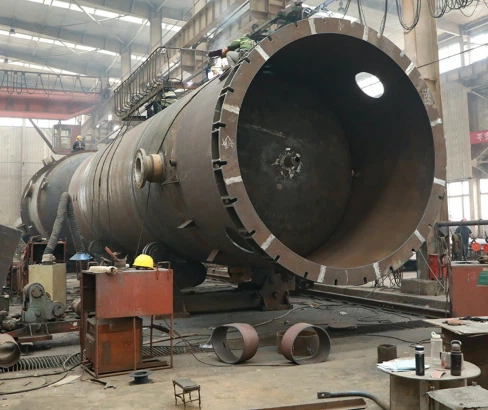
To withstand extreme temperatures, GNEE's shell and tube heat exchangers feature a robust structural design. We use thick-walled tubes and shells made of heat-resistant alloys, combined with precision tube sheet drilling and expanded tube connections to prevent tube pull-out under thermal expansion. The floating head and U-tube designs are widely adopted for high-temperature applications, as they accommodate thermal expansion and contraction, reducing thermal stress on the equipment. Additionally, our engineering team optimizes the flow path design to minimize pressure drop and ensure uniform heat distribution, further enhancing high-temperature performance.
3. Strict Quality Control & Testing
Quality is non-negotiable for oil & gas equipment. GNEE implements strict quality control throughout the manufacturing process, from raw material inspection to final product testing. All heat exchangers undergo hydrostatic testing, pneumatic testing, and non-destructive testing (NDT) such as ultrasonic testing and radiography to detect potential defects. For corrosion-resistant components, we conduct salt spray tests and corrosion immersion tests to verify performance. High-temperature performance is validated through thermal cycling tests, ensuring the equipment operates reliably under design temperature conditions.
Key Applications in Oil & Gas Industry
GNEE's corrosion-resistant and high-temperature shell and tube heat exchangers are widely used in various oil & gas processes, including:
- Crude oil refining: Heat exchange in distillation columns, catalytic reforming units, and hydrotreating processes.
- Natural gas processing: Gas cooling, liquefaction, and dehydration operations.
- Offshore drilling: Compact, corrosion-resistant heat exchangers for offshore platforms, adapting to saltwater and humid environments.
- Pipeline transportation: Heat tracing and temperature control for crude oil and natural gas pipelines in cold regions.
Choose GNEE for Your Oil & Gas Heat Exchanger Needs
With over 20 years of experience in heat exchanger manufacturing, GNEE has established a solid reputation in the oil & gas industry. Our team of professional engineers provides customized solutions based on your specific process parameters, ensuring the heat exchanger perfectly matches your operational needs. We also offer comprehensive after-sales services, including installation guidance, maintenance support, and spare parts supply, to maximize the value of your investment.
If you're looking for a reliable, corrosion-resistant, and high-temperature shell and tube heat exchanger for your oil & gas operation, contact GNEE today. Our team will respond to your inquiry within 24 hours and provide you with a detailed quote and technical proposal.