

Shell and tube heat exchangers are workhorses in countless industrial processes, facilitating efficient heat transfer. However, like any critical equipment, they're susceptible to wear and tear over time. From erosion and corrosion to vibration and fatigue, various factors can lead to tube damage, compromising the exchanger's performance and potentially leading to costly downtime. Fortunately, a range of repair methods exists, offering solutions depending on the severity and type of damage. Understanding these options is crucial for effective maintenance and maximizing the lifespan of these units.
Tier 1 Repairs: Quick Fixes and Targeted Solutions
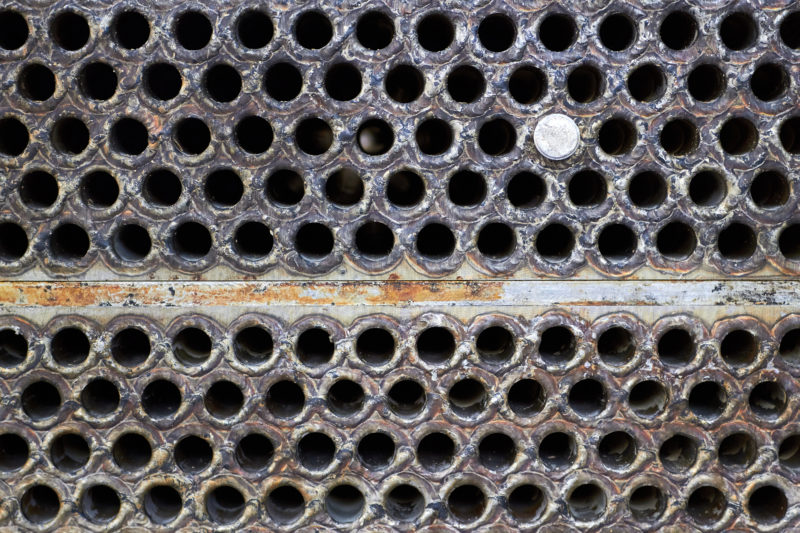 When faced with tube damage, Tier 1 repairs offer the least disruptive and often most cost-effective solutions. These methods are generally employed for isolated issues or as temporary measures to extend the operational life of the exchanger.
One of the simplest and most common Tier 1 options is plugging tubes. This involves sealing off a damaged tube at both ends, effectively taking it out of service. While easy and inexpensive, plugging directly reduces the heat exchanger's overall capacity. A critical consideration is the maximum allowable limit of plugged tubes for a given unit; exceeding this threshold necessitates a more substantial repair, such as a retube or replacement. Therefore, plugging may be less preferred depending on the amount and type of wear.
Another effective Tier 1 repair involves sleeving or ferrules. These methods are ideal for localized wear, extreme thinning, or pitting within a tube. Sleeves are designed to cover the entire length of a damaged tube, while ferrules typically address the tube ends or a specific section. Both are thin-walled inserts, sized closely to the original inner diameter (ID) of the tube. The sleeve or ferrule is inserted into the damaged tube and then expanded at both ends. This expansion creates a tight seal, preventing any media from bypassing the repair and flowing between the insert and the original tube wall. While highly effective at preventing a loss of capacity, it's important to recognize that sleeving and ferrules are generally considered temporary solutions, often used to maintain operation until a retube can occur.
Finally, re-rolling is also an effective repair method to address failures in the tube-to-tubesheet joint. Over time, these joints can become leaky due to various stresses. Re-rolling involves hand-rolling the leaky joints, effectively expanding the tube within the tubesheet hole to create a new, tighter seal. This method is excellent for repairing leaks caused by joint failure but will not address issues such as tube thinning or cracks within the tube itself.
Tier 2 Repairs: Addressing Weld Failures
When the tube experiences a weld failure, a more specific repair approach is required, falling under Tier 2. In such cases, the damaged tube end can be welded or brazed in accordance with TEMA guidelines. This specialized repair requires skilled technicians and appropriate welding or brazing procedures to ensure the integrity of the tube-to-tubesheet joint.
Tier 3 Repairs: The Comprehensive Overhaul

When the damage is extensive, or if the Tier 1 and Tier 2 repair options have proven insufficient, a more comprehensive solution is necessary, categorizing it as a Tier 3 repair. This often involves a partial or full retube. The extent of the damage will dictate whether a localized replacement will suffice or if the entire tube bundle needs to be replaced. This level of repair is typically the most expensive option due to the amount of downtime required, as well as the labor costs associated with the job. While costly, a retube effectively restores the heat exchanger's operating capacity, significantly extending its operational life.
Preventative Maintenance
Regardless of the repair method, early detection and preventative maintenance are key to maximizing the longevity of shell and tube heat exchangers. Techniques such as eddy current testing, hydro testing, and other early leak detection methods can quickly identify wear and assess its severity. By monitoring the unit at regular intervals and conducting routine maintenance, operators can identify potential issues before they escalate, allowing for timely and less disruptive repairs. This proactive approach not only minimizes downtime and repair costs but also ensures the continued efficient and safe operation of these exchangers.
Information such as the specific specifications, heat transfer performance test report, production cycle, and cost quotation of the heat exchanger can be obtained by contacting us immediately-we offer one-on-one exclusive communication to efficiently address your inquiry needs.
Email: sales@gneeheatex.com
FAQ
Q: What is the 10 13 rule for shell and tube heat exchanger?
A: In simple terms, it ensures that the design pressure of the side with lower pressure (whether it's the shell or the tube side) is set to at least 10/13 of the design pressure of the side with higher pressure.
Q: What are the advantages of a shell and tube heat exchanger?
A: They also have notable maintenance advantages: Shell and tube heat exchangers have a build that lends itself to simplified maintenance, increased safety, and overall trouble-free operations. The design of shell and tube heat exchangers allow leaks to be quickly identified and protected from the rest of the unit.
Q: What is a heat exchanger and its function?
A: A heat exchanger is a system used to transfer heat between a source and a working fluid. Heat exchangers are used in both cooling and heating processes. The fluids may be separated by a solid wall to prevent mixing or they may be in direct contact.
Q: What are the three types of heat exchangers?
A: The construction-based classification categorizes heat exchangers based on their physical structure and design. It includes types such as shell and tube, plate, and finned tube heat exchangers, each with distinct characteristics and advantages in heat transfer applications.
Q: Where do you use a heat exchanger?
A: Heat exchangers are used in a range of applications including air conditioning, chemical plants, petrochemical plants, petroleum refineries, power stations, processing natural gas, refrigeration, sewage treatment, and space heating.