



Products Description

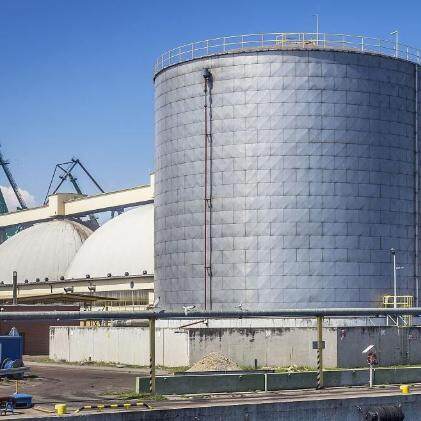
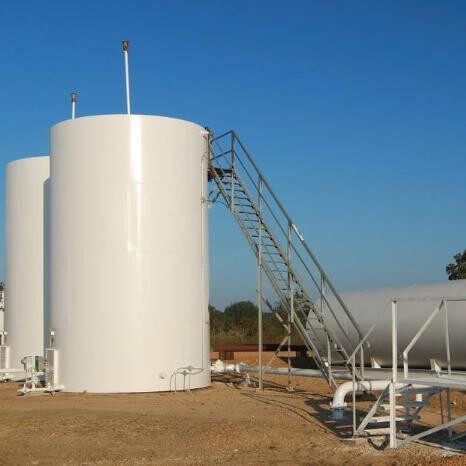
Crude oil storage tanks are steel-sealed containers used for storing crude oil and other petroleum products, mainly applied in industrial fields such as refineries, oil fields, and oil depots.
Their core characteristics are "steel structure" (ensuring strength and corrosion resistance) and "sealing" (preventing oil volatilization, leakage, and the mixing of external impurities).
An oil tank farm is composed of multiple oil tanks, and each oil tank farm typically stores one type of oil product.
Specification
|
Material |
Carbon Steel or Stainless Steel |
|
Design Pressure |
1.65MPa |
|
Working Pressure |
1.4MPa |
|
Working Temperature |
0-204℃ |
|
Crude oil storage tank capacity |
Customized |
Structural Classification
 Vertical Oil Tanks
- Dome-roof type: Mainly used for storing low-volatility oil products such as diesel oil, with a volume usually ranging from 1,000 to 10,000 cubic meters.
- Floating-roof type: The floating roof is in contact with the liquid surface to reduce volatilization loss. It is suitable for volatile oil products such as gasoline, featuring a large volume and diverse structural forms.
Spherical-shell Oil Tanks
Adopting a spherical structural design, they are suitable for storage scenarios requiring resistance to internal pressure, such as for media like liquefied gas.
Horizontal Oil Tanks
Generally, their volume is less than 100 cubic meters, and they are commonly used in gas stations or for temporary storage in the production process.
Crude oil storage tanks design
Dimension Design
The dimension design of crude oil storage tanks should be based on the type of crude oil to be stored, the number of tanks, and the available site area. Common tank shapes include vertical storage tanks and horizontal storage tanks, whose dimensions are generally determined by the tank volume. To ensure the quality and safety of the tanks, the diameter of a conventional tank should not exceed 80 meters, and the total height should not exceed 30 meters.
Material Selection
The material of crude oil storage tanks should be selected based on factors such as the properties of the crude oil to be stored, the storage environment, and the budget. Common materials include carbon steel, stainless steel, fiberglass-reinforced plastic (FRP), and concrete. When selecting materials, factors such as corrosion resistance, plasticity, and thermal expansion and contraction properties should also be considered.
Lining Design
Since crude oil contains certain sand particles, moisture, acidic substances, etc., the interior of conventional storage tanks needs to be equipped with lining materials to protect the tank body from erosion. Common lining materials include natural rubber, polytetrafluoroethylene (PTFE), and butyl rubber. The thickness of the lining should generally not be less than 3mm to ensure its service life and anti-corrosion effect.

Safety Facilities
Fire protection system: Equipped with fire-fighting foam chambers, sprinkler devices, and fire dikes (mandatory for above-ground oil tank farms).
Lightning protection devices: Include grounding grids and lightning rods; resistance values must be tested regularly.
Anti-static measures: Static discharge devices and conductive grounding wires are installed.
Maintenance and Inspection
Floating roof maintenance: Regularly inspect the sealing performance and the flexibility of guide posts to prevent jamming or leakage.
Pipeline inspection: Pressure tests must be conducted annually on heating pipelines to prevent medium solidification.
Tank body inspection: Includes tank wall corrosion detection and foundation settlement observation (at least once a quarter).
Packaging & Shipping
Storage tank will be packaged by waterproof plastic woven clothes, and loaded into container or by bulk ship.

ABOUT US
GNEE was founded in 2008 and is located at No.4-1114, Beichen Building, Beicang Town, Beichen District, Tianjin, China. It is an entity enterprise engaging in high-end industrial equipment manufacturing, focusing on the R&D, manufacturing and related technical services of industrial heat exchange equipment and pressure vessels.
Since its establishment, the company has adhered to the philosophy of "achieving customers, making employees happy; embracing changes, valuing actions; there is no best, only better". With the goal of providing one-stop services to make choices easier, it has been deeply engaged in industrial heat exchange equipment for many years and has become an excellent and irreplaceable presence in the industry.
If you want to learn more about GNEE's products, you can send an email to sales@gneeheatex.com. We are more than happy to assist you.
FAQ
Q: How do crude oil storage tanks work?
A: Upon being introduced into a storage tank at above atmospheric pressure, crude oil and condensate experience pressure drops which cause gases dissolved in the liquid to vaporize or 'flash' out of the liquid phase and collect in the vapor space between the liquid and the fixed roof of the storage tank.
Q: What is the capacity of a crude oil storage tank?
A: Crude Oil Storage Tank Capacity: Crude oil storage tanks can hold a range from 50,000 to millions of barrels of oil, with sizes often detailed in a crude oil storage tank size chart, like the one shown here.
Q: Do I need planning permission for an oil tank?
A: As of 2022, you won't need planning permission as long as: Your tank does not exceed a 3500-litre capacity. Your tank isn't being stored in front of the main elevation fronting a public road. The height of your tank is not greater than 3 metres.
Q: What is the life expectancy of an oil storage tank?
A: around 20-25 years
While they can last several decades if very well-maintained, most modern oil tanks have a functional lifespan of around 20-25 years, or thereabouts. Older tanks are increasingly prone to corrosion, fatigue and problems if not treated with the proper maintenance and upkeep that they need to continue working.
Q: Why do oil tanks have floating roofs?
A: Floating roofs are made of a structure which floats on the surface of the liquid in order to prevent the formation of a gas overhead, and thus reduces: Fire risks. Atmospheric pollution. Evaporation losses.


